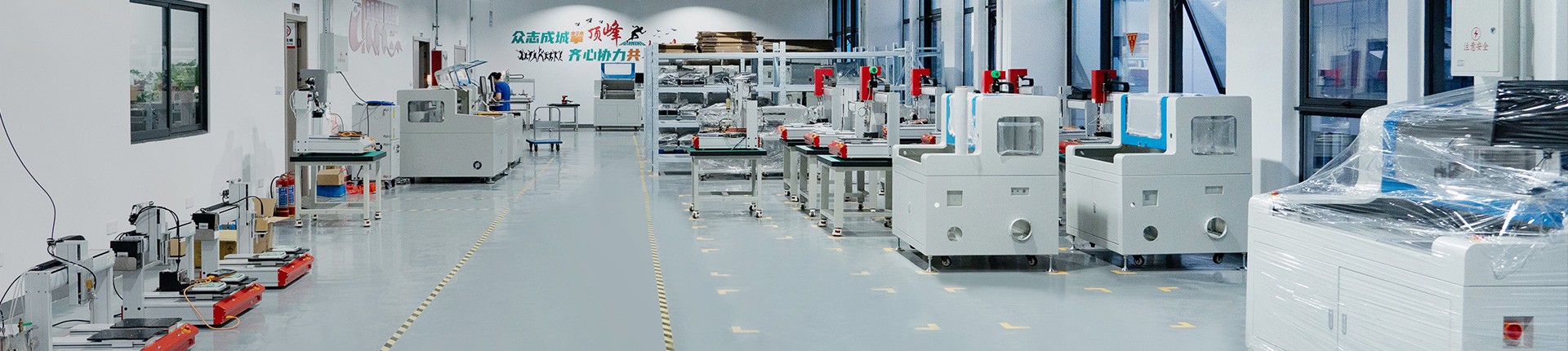
The wrong depaneling method costs more than the machine. Stress fractures, burrs, and inconsistent cuts lead to scrap, rework, and field failures. JELIO has spent 15 years matching cutting processes to board requirements. Here is how the three most common methods compare.
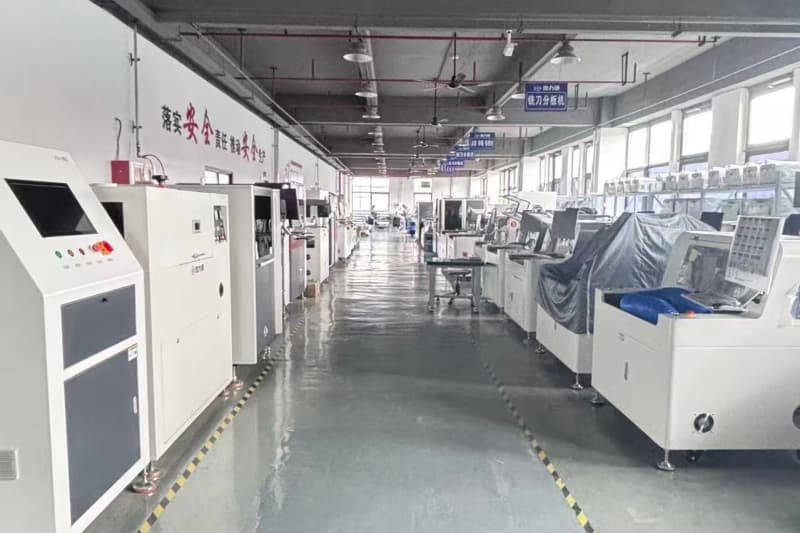
Milling Cutter Depaneling
Best for complex profiles, dense component layouts, and sensitive substrates.
A high-speed spindle routes around components with minimal mechanical stress. JELIO's milling platforms handle irregular shapes and tight clearances that blade methods cannot touch. The trade-off is cycle time. For automotive electronics, medical devices, and semiconductor modules where edge quality is critical, milling remains the standard.
Router Depaneling
Best for standard V-groove panels and mixed-product lines.
A router bit follows pre-scored grooves or programmed paths. It is faster than milling for straight-line cuts and handles curved separation lines with flexibility. The cutting force is higher than milling, so fragile components near the edge need evaluation. JELIO recommends router systems for EMS providers and consumer electronics where throughput matters and board geometries are moderate.
Guillotine Depaneling
Best for rigid V-groove panels with simple straight-line cuts.
A pneumatic or electric blade shears the board along the V-score. It is the fastest and lowest-cost method, with minimal maintenance. The limitation is geometry. Guillotine only handles straight-line separations, and components near the edge risk damage. For LED lighting, power supplies, and other rigid boards without fragile edge components, JELIO's guillotine platforms deliver clean results at the lowest cost per board.
Making the Decision
Start with board geometry and component density. Evaluate tolerance for edge quality and stress. Match production volume to cycle time. JELIO offers free sample testing across all three methods. Send your board, see the cut, and choose with confidence.


Router / Milling DepanelingGuillotine DepanelingLaser DepanelingIntegrated SystemsPeripheral Equipment
Automotive ElectronicsSemiconductor & ElectronicsNew EnergyLED & LightingConsumer Electronics
Company ProfileR&D & InnovationManufacturing CapabilityGlobal Clients
LINE ID: jeliochina
Office HeadquartersNo. 5 Datong Road, High-Tech Zone
Suzhou, Jiangsu 215000, China
 Scan LINE QR
© 2026 JELIO Automation. All rights reserved.

+8618994642000


 LINE ID: jeliochina
 Email: xiafangtong@gmail.com